- Scalp health problems such as dandruff, an oily scalp and a sensitive scalp can look alike, but each needs different care.
- Dubai’s heat, humidity, air conditioning and hard water can all affect your scalp.
- Persistent flaking, redness or shedding is worth a professional assessment.
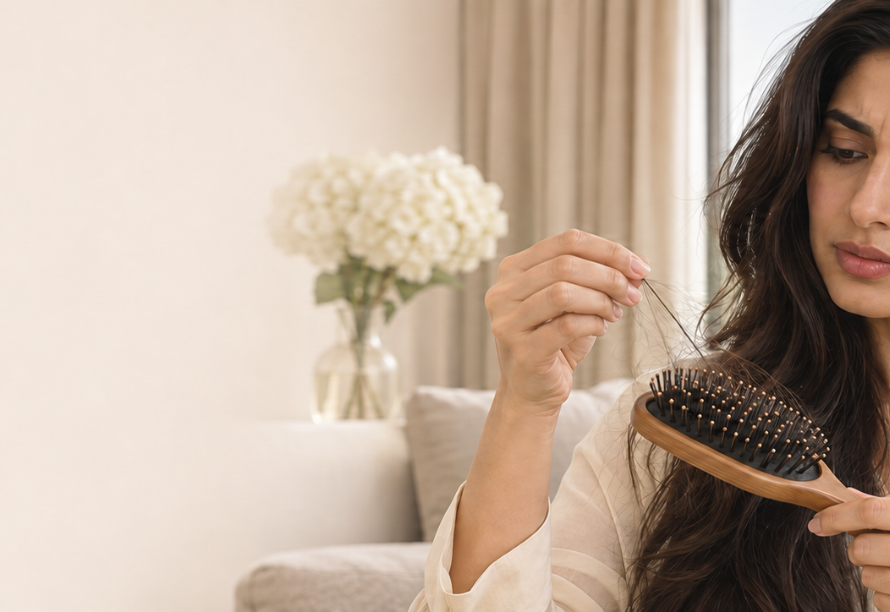
Flakes on your shoulders, hair that looks greasy a day after washing, or a scalp that itches and stings can all be signs that your scalp health needs attention. In Dubai, the heat, humidity, constant air conditioning and hard water add extra challenges that many people don’t connect with their scalp.
Good scalp health is the foundation of healthy hair: your scalp is the skin your hair grows from, so a comfortable, balanced scalp supports everything that grows from it. At Vivandi Trichology Center, we see these three concerns every day, and we know that treating the wrong one can make things worse. Here is how to tell them apart and what you can do about each.
Why scalp health matters
Scalp health describes how balanced and comfortable the skin under your hair is. Your scalp has thousands of hair follicles, oil (sebaceous) glands and a community of natural microorganisms. When these are in balance, your scalp feels comfortable. When the balance tips, through excess oil, irritation, product build-up or yeast overgrowth, you notice flaking, itching, redness or greasiness.
Common triggers include:
- Hormonal changes, stress and poor sleep
- Diet and hydration
- Heat, humidity and sweat, then cold, dry air conditioning
- Hard water and chlorinated pools
- Hair products and washing habits
- Head coverings, helmets or caps worn for long periods
Dandruff and scalp health: more than dry skin
Dandruff appears as white or yellowish flakes, often with itching. It is frequently mistaken for a dry scalp.
What causes it? Dandruff is commonly linked to Malassezia, a yeast that lives on most scalps without causing problems. In some people it triggers an inflammatory response that speeds up skin cell turnover and produces visible flaking. Individual sensitivity, oil production, stress and seasonal changes can all play a part.
Dandruff vs. dry scalp
| Dandruff | Dry scalp | |
|---|---|---|
| Flakes | Larger, may look oily or yellowish | Small, white and powdery |
| Scalp feel | Can be oily or irritated | Tight and dry |
| Other signs | Itching, sometimes redness | Dryness elsewhere on the body |
What helps
- Use a shampoo formulated for dandruff. Active ingredients commonly used include zinc pyrithione, selenium sulphide and salicylic acid. Stronger options such as ketoconazole may require a pharmacist’s or trichologist’s advice on the right strength.
- Leave the product on for the time stated on the label so it can work.
- Avoid scratching, which can damage the skin and add inflammation.
- If a product stops working as well, ask a professional about alternatives rather than simply using more of it.
Oily scalp and scalp health: when sebum goes into overdrive
Sebaceous glands produce sebum, a natural oil that protects the skin and coats the hair. When production is high, hair can look flat and greasy within hours of washing.
Common contributors
- Genetics and hormonal shifts, including puberty, pregnancy, menstrual cycle changes and stress
- Heavy conditioners or styling products applied close to the roots
- Humidity and sweating, especially in summer
- Washing habits that don’t suit your scalp. Some people find that over-washing with harsh formulas leaves the scalp feeling stripped and then greasy again quickly
What helps
- Choose a gentle, balancing shampoo, and concentrate it on the scalp.
- Apply conditioner to the mid-lengths and ends only.
- Keep to a consistent wash routine that suits your scalp, rather than skipping washes until it feels unbearable.
- Use a clarifying shampoo occasionally to remove build-up, particularly if you live with hard water.
- Very hot water can irritate the scalp, so rinse with lukewarm water.
Dandruff and an oily scalp can occur together. Seborrhoeic dermatitis, a more persistent form of dandruff, usually affects oily areas of the skin and can cause redness and greasy-looking scales. If flaking and greasiness keep coming back, have it checked.
Sensitive scalp: when irritation affects scalp health
A sensitive scalp reacts easily. You may notice:
- Stinging, burning or tingling
- Itchiness without obvious flaking
- Redness or tenderness when brushing or styling
- Reactions after using certain products, dyes or treatments
Possible causes
- Fragrances, preservatives or harsh cleansing agents in hair products
- Hair colour and chemical treatments
- Allergic or irritant contact dermatitis
- Underlying skin conditions such as eczema or psoriasis
- Sun, wind, pollution and chlorine
What helps
- Choose fragrance-free, gentle formulas and introduce one new product at a time.
- Rinse thoroughly so no residue is left behind.
- Use lukewarm water and pat your scalp dry rather than rubbing.
- Patch test before colouring or using strong treatments.
- Keep a simple diary of products and symptoms to help spot triggers.
Scalp health for different hair types and styles
How often you wash depends on your hair type and styling, not just your scalp.
- Straight and wavy hair often shows oil sooner and may need more frequent washing.
- Curly, coily and textured hair is usually washed less often because natural oils travel down the strands more slowly, but the scalp still needs regular cleansing.
- Braids, extensions and protective styles: keep the scalp clean, avoid heavy products that build up, and avoid styles that pull tightly on the scalp. Tension can cause soreness and contribute to hair loss over time.
- Head coverings, hijabs, caps and helmets: choose breathable fabrics, and wash coverings regularly, as trapped sweat and heat can aggravate flaking and itching.
A simple scalp health routine for Dubai’s climate
- Cleanse: Wash as often as your scalp and hair type need, using a shampoo matched to your concern.
- Massage: Use your fingertips, not nails, for about a minute to loosen flakes.
- Condition the lengths: Keep heavy products away from the roots.
- Rinse well: A shower filter can help if hard water leaves your hair feeling coated or dull.
- Protect: Limit heat styling and use sun protection on an exposed parting or scalp.
- Hydrate and nourish: A balanced diet, good hydration and sleep, and stress management all support scalp health.
Could your scalp concern be linked to hair loss?
Persistent flaking, inflammation or irritation can sometimes go hand in hand with increased shedding or thinning. This doesn’t mean dandruff causes hair loss, but a scalp that is inflamed or uncomfortable is worth investigating, especially if you also notice more hair on your pillow or in the shower drain. Our Hair Test is a quick way to start, and our team can take a closer look at both the scalp and the hair.
When to see a trichologist in Dubai
Over-the-counter care is enough for many people. Book an assessment if you notice:
- Symptoms that persist or keep returning despite consistent treatment
- Thick, scaly or inflamed patches, or red, painful areas
- Increased shedding, thinning or bald patches
- Sores, oozing or scalp pain
- Itching or burning that disrupts your sleep or daily life
Conditions such as psoriasis, eczema, fungal infections (tinea capitis) and contact dermatitis can look like dandruff, so a proper diagnosis matters. A trichologist can examine your scalp and hair, identify the likely cause and recommend a plan tailored to you. Where a medical condition is suspected, we may refer you to a dermatologist or doctor.
At Vivandi Trichology Center, our Hair & Scalp Treatments and Hair Loss Consultation & Treatment services are designed around your individual scalp and hair needs. Meet our team or book a consultation at our Fairmont Dubai clinic, or message us on WhatsApp.
Frequently asked questions
Is dandruff the same as a dry scalp?
No. Dandruff is usually linked to yeast and inflammation and often involves larger, oilier flakes. A dry scalp lacks moisture and produces smaller, powdery flakes. Treating one as the other can make symptoms worse.
Can an oily scalp and dandruff happen together?
Yes. Excess oil can feed the yeast linked to dandruff. Seborrhoeic dermatitis is a persistent form that often combines oiliness, flaking and redness.
Does Dubai’s climate affect my scalp?
It can. Heat and humidity increase sweat and oil, while air conditioning can dry the skin. Hard water may leave residue on the scalp and hair.
How often should I wash my hair?
It depends on your scalp and hair type. Many people with oily scalps wash several times a week, while textured and coily hair is often washed less frequently. Choose a routine that keeps your scalp clean and comfortable.
Can scalp problems cause hair loss?
Scalp conditions don’t always cause hair loss, but inflammation and persistent irritation can sometimes accompany shedding. If you notice thinning, a professional assessment can help identify the cause.
When should I see a trichologist?
See one if symptoms persist despite treatment, if you have painful, inflamed or scaly patches, or if you notice shedding or thinning.